


Tamoxifen Tablets
Tamoxifen is commonly supplied as an oral tablet. Check the labeled amount per tablet and total package quantity on each individual product listing.
Selective Estrogen Receptor Modulator (SERM)
Browse Tamoxifen products and compare labeled tablet strengths, package quantities, manufacturers, published lab reports and current USA Domestic or International Warehouse availability.
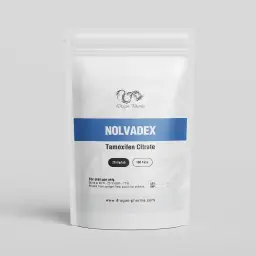
Selective Estrogen Receptor Modulator (SERM)

Selective Estrogen Receptor Modulator (SERM)

Selective Estrogen Receptor Modulator (SERM)

Selective Estrogen Receptor Modulator (SERM)

Trade Name: Tamoxifen
Compound: Tamoxifen Citrate
Strength: 40 mg/pill
Container: 100 Pills
Manufacturer: Stealth Labs USA
Lab Tested: View Result
Shipped Without Label!
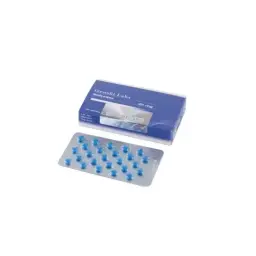
Selective Estrogen Receptor Modulator (SERM)
The Tamoxifen category brings together available products containing this selective estrogen receptor modulator (SERM), also widely associated with the Nolvadex name. Tamoxifen interacts with estrogen receptors and produces tissue-dependent effects rather than directly reducing estrogen production. Browse available products and compare labeled tablet strengths, package quantities, manufacturers, published laboratory testing, pricing and USA Domestic or International warehouse availability.
Tamoxifen is commonly supplied as an oral tablet. Check the labeled amount per tablet and total package quantity on each individual product listing.
Products can differ in labeled tablet strength, package quantity and manufacturer even when they contain the same active pharmaceutical ingredient.
Where laboratory reports are available, individual product pages provide access to measured results, testing dates and reported batch information.
Tamoxifen products may be stocked in the USA Domestic Warehouse, International Warehouse or both depending on current inventory.
Tamoxifen is a prescription medicine belonging to the selective estrogen receptor modulator (SERM) class. It interacts with estrogen receptors and can act differently depending on the tissue involved.
Tamoxifen is not an anabolic-androgenic steroid and does not directly lower estrogen synthesis. Its pharmacology is therefore different from aromatase inhibitors and from substances that directly provide or mimic androgens.
Tamoxifen is commonly supplied pharmaceutically as tamoxifen citrate. Nolvadex is a widely recognized brand name associated with Tamoxifen, while generic and manufacturer-specific products can use other names and packaging.
When comparing products, check the listed active substance, labeled tablet strength, package quantity and manufacturer rather than relying solely on a familiar brand name.
Tamoxifen works by interacting with estrogen receptors. As a SERM, its effects can vary according to the tissue involved rather than producing one uniform estrogen-blocking effect throughout the body.
This tissue-selective pharmacology is central to understanding Tamoxifen. In some tissues it can oppose estrogen-mediated signaling, while in others it can display estrogen-like activity.
For that reason, describing Tamoxifen simply as an "estrogen blocker" leaves out an important part of how the medicine actually works.
Tamoxifen and Clomiphene both belong to the SERM class, but they are separate medicines with different established clinical uses and pharmacological characteristics.
Both interact with estrogen receptors, yet their effects on different tissues and endocrine signaling should not be assumed to be identical simply because they share the same broad drug classification.
Clomiphene is particularly associated with reproductive endocrinology and ovulation induction, while Tamoxifen has an established role in the treatment and risk reduction of certain estrogen receptor-positive breast cancers.
Toremifene is another selective estrogen receptor modulator and is structurally related to Tamoxifen, but the two are distinct active pharmaceutical ingredients.
Their medical indications, pharmacokinetics, safety considerations and product specifications can differ. Products should therefore be compared by active ingredient rather than assuming that all SERMs represent interchangeable versions of the same medicine.
Tamoxifen should not be confused with aromatase inhibitors such as Anastrozole and Exemestane. Although all of these medicines involve estrogen-related pathways, they work through fundamentally different mechanisms.
Tamoxifen modifies signaling at estrogen receptors. Aromatase inhibitors instead reduce estrogen synthesis by inhibiting the aromatase enzyme.
A SERM and an aromatase inhibitor should therefore not be treated as interchangeable simply because both may appear within an estrogen-related or ancillary product catalog.
When browsing Tamoxifen products, useful comparison points include the labeled amount per tablet, total tablet count, manufacturer, current price, warehouse location and published laboratory testing where available.
Products containing Tamoxifen can use different manufacturer-specific branding and package configurations. Reviewing the complete product specification provides a clearer comparison than relying on packaging or price alone.
The labeled mg-per-tablet strength identifies the amount of active ingredient stated for each tablet. Package quantity separately identifies the total number of tablets supplied.
Two Tamoxifen products can therefore contain the same active substance while differing in tablet strength or package quantity. Check both specifications when comparing available products.
Selected Tamoxifen products may have published laboratory reports that provide an additional reference point when comparing the labeled specification with the measured result reported for a submitted sample.
Where testing is available, review the identified active substance, measured result, testing date and reported batch number. If multiple reports have been published, results from different batches or testing dates can be reviewed individually.
Each laboratory report applies to the submitted sample identified in that analysis. A result from one sample does not independently verify every tablet, package or future production batch.
Tamoxifen has a long-established role in the management of certain estrogen receptor-positive breast cancers. Its ability to modify estrogen receptor signaling is central to these medical applications.
Tamoxifen can be used in different clinical settings, including treatment and, for appropriately selected individuals, reduction of breast-cancer risk. The specific indication, duration of treatment and risk-benefit assessment depend on individual medical circumstances.
Its established medical uses should be distinguished from non-approved uses discussed in bodybuilding or performance-enhancement communities.
A common misconception is that Tamoxifen simply removes estrogen from the body. It does not. Tamoxifen primarily changes estrogen receptor signaling rather than directly stopping estrogen production.
Estrogen can therefore remain present while Tamoxifen modifies its effects at particular receptors and tissues. This distinction explains why Tamoxifen and an aromatase inhibitor can produce different physiological effects despite both being associated with estrogen-related treatment.
Tamoxifen is frequently discussed in bodybuilding communities because some anabolic-androgenic steroids can alter normal hormone signaling and, in some cases, increase estrogenic activity through aromatization. Testosterone, for example, can be converted through the aromatase pathway.
However, anabolic steroids differ considerably in their metabolism. The presence of an anabolic compound does not automatically establish that a SERM is necessary, and Tamoxifen does not simply neutralize every estrogen-related or androgen-related effect associated with steroid exposure.
Hormonal symptoms also cannot reliably establish estrogen status or identify their underlying cause without appropriate assessment.
For that reason, this category explains the pharmacological relationship between Tamoxifen, estrogen signaling and anabolic steroids without providing steroid-cycle combinations or individualized hormone-management protocols.
Tamoxifen is also commonly discussed in the context of post-cycle therapy (PCT) following exposure to anabolic-androgenic steroids. This relates to the effects that external androgens can have on normal hypothalamic-pituitary-gonadal signaling.
Different anabolic substances and esters can remain active for different periods. For example, Testosterone Cypionate and Testosterone Propionate have different pharmacokinetic profiles despite ultimately delivering testosterone.
The degree and duration of endocrine suppression can also vary considerably between individuals. A previous steroid cycle therefore does not, by itself, establish which medicine is appropriate or when normal hormonal function will recover.
This category provides information about Tamoxifen rather than standardized PCT schedules, Tamoxifen doses or individualized post-cycle protocols.
Tamoxifen is a pharmacologically active prescription medicine and can cause clinically significant adverse effects. Commonly reported effects can include hot flashes and other symptoms related to altered estrogen signaling.
More serious risks can include venous thromboembolism, including deep-vein thrombosis and pulmonary embolism. Symptoms that could indicate a blood clot require prompt medical evaluation.
Tamoxifen also has important effects on the uterus and is associated with an increased risk of endometrial abnormalities, including endometrial cancer in relevant populations. Abnormal vaginal bleeding warrants appropriate medical evaluation.
Visual and ocular effects can occur, and Tamoxifen can interact with other medicines. Individual risks depend on medical history, treatment indication, duration of exposure and other medications.
A published laboratory report can provide information about an analyzed product sample but does not establish that taking Tamoxifen is medically appropriate or safe for an individual. This category is intended for product identification and comparison and does not provide individualized treatment, PCT or dosing guidance.
Tamoxifen undergoes metabolism to pharmacologically active metabolites, and drug-metabolizing enzymes contribute to this process. Other medicines can potentially alter Tamoxifen metabolism and should be considered when treatment is medically prescribed.
This is another reason product strength alone does not determine the effect a person will experience. Other medications, individual metabolism and the underlying clinical indication can all influence treatment considerations.
No. Tamoxifen is a selective estrogen receptor modulator, not an aromatase inhibitor.
Aromatase inhibitors such as Anastrozole, Exemestane and Letrozole reduce estrogen synthesis by targeting the aromatase enzyme. Tamoxifen instead interacts with estrogen receptors.
Keeping these mechanisms separate makes it easier to understand and compare the different estrogen-related substances within the broader ancillary catalog.
Tamoxifen products may be available from the USA Domestic Warehouse, the International Warehouse, or both. Available manufacturers, tablet strengths and stock levels can differ between warehouse locations.
For delivery within the United States, USA Domestic shipments typically take 4–5 business days after dispatch, while International Warehouse shipments typically take 15–20 business days after dispatch.
Delivery estimates begin after dispatch and do not include order processing time. Additional delivery, tracking and reship information is available on the Shipping Information page.
Bitcoin and other supported cryptocurrencies are available at checkout. When comparing Tamoxifen products, review the manufacturer, labeled tablet strength, package quantity, current price, available laboratory reports and warehouse location.
Where the store's separate crypto discount applies, eligibility depends on the current pricing status of the product. Already discounted products should not automatically be assumed to qualify for an additional discount.

