


Different Insulin Types
Insulin products are not interchangeable simply because they contain insulin. Check the exact insulin or insulin analog listed for each product.
Insulin Products
Browse insulin products and compare insulin type, labeled concentration, vial or cartridge format, manufacturer, package specifications and current USA Domestic or International Warehouse availability.
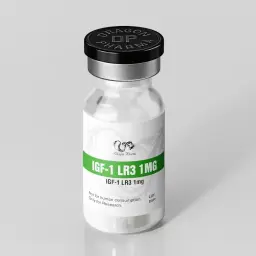
Insulin-Like Growth Factor
Insulin Products
The Insulin category brings together available products containing insulin or insulin analogs. Products can differ substantially in insulin type, labeled concentration, formulation, container format, manufacturer and storage requirements. Browse the current selection and compare the complete product specification together with pricing and USA Domestic or International warehouse availability.
Insulin products are not interchangeable simply because they contain insulin. Check the exact insulin or insulin analog listed for each product.
Insulin is commonly labeled in units per milliliter, such as U-100. Always check the exact concentration stated on the individual product.
Depending on the product and manufacturer, insulin may be supplied in vials, cartridges or other delivery-system-specific formats.
Available insulin products and manufacturers can differ between the USA Domestic and International warehouses according to current inventory.
Insulin is a peptide hormone that plays a central role in regulating blood glucose and energy metabolism. Pharmaceutical insulin products include human insulin as well as insulin analogs engineered to have different pharmacokinetic characteristics.
Unlike anabolic-androgenic steroids, insulin does not act through the androgen receptor and should not be grouped pharmacologically with testosterone, Nandrolone, Trenbolone or other anabolic steroids simply because these products may appear within the same broader catalog.
Insulin is an essential prescription medicine for people with type 1 diabetes and is also used in the treatment of some people with type 2 diabetes and other clinical circumstances under medical supervision.
There are multiple categories of insulin products with different onset and duration characteristics. Depending on the active ingredient, products may be described as rapid-acting, short-acting, intermediate-acting, long-acting or another specific formulation.
These descriptions are clinically meaningful and should not be treated as simple marketing differences. Two insulin products with the same labeled concentration can have substantially different pharmacokinetic profiles.
For this reason, the complete active ingredient and product name should be checked rather than comparing insulin products solely by units, container size or price.
The term insulin covers more than one pharmaceutical formulation. Some products contain human insulin, while others contain modified insulin analogs designed to alter characteristics such as absorption and duration of action.
Manufacturer branding can make these differences less obvious when products are viewed side by side. Checking the active ingredient on the product page provides a more reliable comparison than relying on the brand or package appearance alone.
Insulin concentration is commonly expressed as units per milliliter. For example, U-100 identifies a formulation containing 100 units of insulin per milliliter.
The concentration is a critical product specification and should always be checked directly on the product labeling. Different concentrations should never be assumed to be interchangeable based on similar packaging or product names.
Units of insulin also should not be confused with milligrams or micrograms used for other substances in the catalog. The numerical values describe different forms of measurement and cannot be directly compared.
Insulin products can be supplied in different container and delivery formats. Traditional multidose vials are one format, while other products may use cartridges or manufacturer-specific delivery systems.
When comparing products, check the insulin type, concentration, volume, number of containers and exact product format. A cartridge should not automatically be assumed to be compatible with a particular device unless that compatibility is specifically stated by the manufacturer.
When browsing insulin products, useful comparison points include the exact active ingredient, insulin type, labeled concentration, container format, volume, package quantity, manufacturer, current price and warehouse location.
Products with similar unit concentrations can still have different active ingredients and action profiles. Conversely, the same insulin type may be available in different container formats or package configurations.
These characteristics should be reviewed individually rather than assuming products with similar names, concentrations or packaging are interchangeable.
Storage conditions are particularly important for insulin. Insulin is a biological medicine, and exposure to inappropriate temperatures can affect product integrity.
Unopened insulin products commonly have manufacturer-specified refrigerated storage requirements, while allowable storage conditions and time limits after opening or first use can vary by product.
Insulin should not be frozen. Products that have been frozen, exposed to excessive heat or stored outside their specified conditions may no longer be suitable for use.
Always follow the storage instructions supplied for the specific insulin product rather than applying the requirements of one brand or formulation to another.
Hypoglycemia, or dangerously low blood glucose, is one of the most important risks associated with insulin. Severe hypoglycemia can cause confusion, loss of consciousness, seizures, coma and can be fatal.
The risk depends on numerous factors, including the specific insulin, individual medical requirements, food intake, physical activity, other medicines and underlying health conditions.
Because different insulin formulations have different action profiles and concentrations, substituting one product for another or using insulin without appropriate medical guidance can create serious risks.
Insulin is a powerful prescription medicine that requires individualized clinical management. The correct product and treatment requirements depend on a person's medical condition, blood-glucose management and other individual factors.
In addition to hypoglycemia, insulin therapy can be associated with other adverse effects, including injection-site reactions and changes in potassium levels. Individual insulin products can also have product-specific warnings, contraindications and interactions.
This category is intended to help identify and compare product specifications. It does not provide individualized dosing, bodybuilding protocols, injection schedules or instructions for changing from one insulin formulation to another.
Insulin is sometimes discussed in bodybuilding and performance-enhancement contexts because of its metabolic effects. This type of non-medical use carries substantial risk and should not be confused with medically supervised insulin treatment.
In particular, inappropriate insulin exposure can produce severe hypoglycemia with rapidly developing neurological consequences. Product availability should therefore not be interpreted as evidence that non-prescribed performance use is safe or medically appropriate.
For that reason, this category provides product-identification and safety information rather than insulin dosing or bodybuilding-use protocols.
Insulin is a well-established medicine used in diabetes care. People with type 1 diabetes require insulin because their bodies do not produce sufficient endogenous insulin, while insulin can also be prescribed in type 2 diabetes and other clinical situations.
The specific insulin formulation, delivery system and treatment plan are selected according to individual clinical requirements. A product appropriate for one person's treatment should not automatically be considered an equivalent substitute for another insulin formulation.
Where additional product documentation or laboratory information is published for an insulin product, it can provide another reference point when reviewing the product's stated specifications.
Biological medicines require appropriate analytical methods, and laboratory information for insulin should not automatically be interpreted in the same way as a straightforward mg-per-tablet assay for a small-molecule product.
Any published analysis applies to the sample identified in that report and does not independently establish the safety, clinical suitability or correct use of the product for an individual.
Insulin products may be available from the USA Domestic Warehouse, the International Warehouse, or both. Available insulin types, manufacturers, product formats and stock levels can differ between warehouse locations.
For delivery within the United States, USA Domestic shipments typically take 4–5 business days after dispatch, while International Warehouse shipments typically take 15–20 business days after dispatch.
Delivery estimates begin after dispatch and do not include order processing time. Because insulin is temperature-sensitive, review the product-specific storage information in addition to general Shipping Information.
Bitcoin and other supported cryptocurrencies are available at checkout. When comparing insulin products, review the exact active ingredient, insulin type, concentration, container format, manufacturer, package quantity, current price and warehouse location.
Where the store's separate crypto discount applies, eligibility depends on the current pricing status of the product. Already discounted products should not automatically be assumed to qualify for an additional discount.

