


Cabergoline Tablets
Cabergoline is commonly supplied as an oral tablet. Check the labeled amount per tablet and total package quantity on each individual product listing.
Dopamine Agonist
Browse Cabergoline products and compare labeled tablet strengths, package quantities, manufacturers, published lab reports and current USA Domestic or International Warehouse availability.

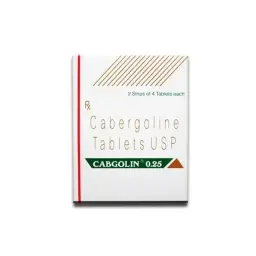

Trade Name: Dostinex 0.5 mg
Compound: Cabergoline
Strength: 0.5 mg/pill
Container: 100 Pills
Manufacturer: Generic
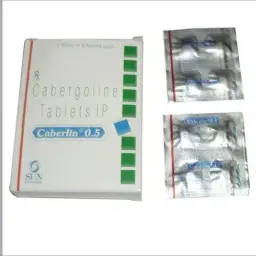
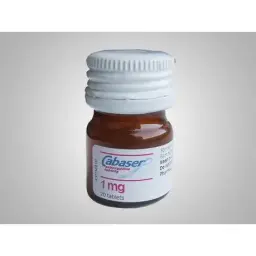
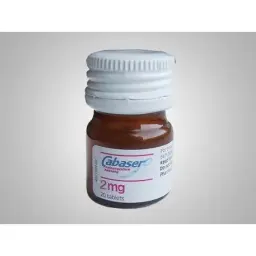
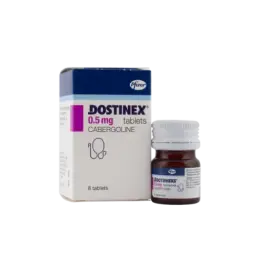
Trade Name: Dostinex
Compound: Cabergoline
Strength: 0.5 mg/pill
Container: 2 Pills
Manufacturer: Pfizer
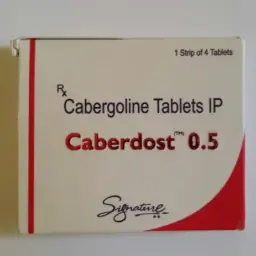
Dopamine Agonist
The Cabergoline category brings together available products containing this dopamine receptor agonist. Cabergoline is a prescription medicine with established applications involving elevated prolactin and is pharmacologically distinct from anabolic steroids, aromatase inhibitors and SERMs. Browse available products and compare labeled tablet strengths, package quantities, manufacturers, published laboratory testing, pricing and USA Domestic or International warehouse availability.
Cabergoline is commonly supplied as an oral tablet. Check the labeled amount per tablet and total package quantity on each individual product listing.
Cabergoline products can differ in labeled tablet strength, package quantity and manufacturer even when they contain the same active substance.
Where laboratory reports are available, individual product pages provide access to measured results, testing dates and reported batch information.
Cabergoline products may be stocked in the USA Domestic Warehouse, International Warehouse or both depending on current inventory.
Cabergoline is a prescription dopamine agonist belonging to the ergot-derived class of medicines. It has strong activity at dopamine D2 receptors and can suppress secretion of the hormone prolactin from the pituitary gland.
Cabergoline is not an anabolic-androgenic steroid, aromatase inhibitor or SERM. Although it may appear alongside hormonal and ancillary products within the same catalog, its mechanism and pharmacological role are distinctly different.
Cabergoline acts primarily as a dopamine D2 receptor agonist. Dopamine participates in numerous neurological and endocrine processes, including the normal regulation of prolactin secretion.
Activation of dopamine receptors in the pituitary can inhibit prolactin release. This mechanism underlies Cabergoline's established clinical role in conditions associated with excessive prolactin secretion.
Because dopamine receptors are involved in functions beyond prolactin regulation, Cabergoline should not be viewed simply as a product that changes a single hormone measurement.
One of Cabergoline's principal endocrine effects is the suppression of prolactin secretion. Elevated prolactin can occur for several reasons, including certain pituitary disorders and the effects of some medications.
Symptoms alone cannot reliably establish hyperprolactinemia. Appropriate laboratory testing and clinical assessment are important because similar symptoms can have unrelated causes.
Prolactin also has normal physiological functions, so lowering it without an established reason should not be treated as a general performance or health objective.
Cabergoline and Bromocriptine are both dopamine agonists capable of suppressing prolactin, but they are separate medicines with different pharmacological characteristics.
An important distinction is duration of action. Cabergoline is a relatively long-acting dopamine agonist, whereas Bromocriptine has a shorter duration of action. Their tolerability profiles and other pharmacological characteristics can also differ.
The two medicines should therefore not be treated as interchangeable solely because both can lower prolactin. When treatment is medically indicated, selection depends on the underlying condition, individual health factors and clinical response.
Cabergoline should not be confused with aromatase inhibitors such as Anastrozole. The two classes affect different hormonal pathways.
Anastrozole inhibits aromatase and reduces estrogen synthesis. Cabergoline instead acts primarily through dopamine receptors and can suppress prolactin secretion. A change in prolactin is therefore not the same as a change in estrogen.
This distinction is particularly useful when browsing ancillary products because their placement within the same catalog does not mean that they have equivalent mechanisms or purposes.
When browsing Cabergoline products, useful comparison points include the labeled amount per tablet, total tablet count, manufacturer, current price, warehouse location and published laboratory testing where available.
Products containing Cabergoline can use different manufacturer-specific branding and package configurations. Checking the actual active substance and complete product specification provides a more reliable comparison than relying on branding or price alone.
The labeled mg-per-tablet strength identifies the amount of Cabergoline stated in each tablet. Package quantity separately identifies the total number of tablets supplied.
Two Cabergoline products can therefore contain the same active substance while differing in tablet strength or total package quantity. Both specifications should be reviewed when comparing available products.
Selected Cabergoline products may have published laboratory reports that provide an additional reference point when comparing the labeled specification with the measured result reported for a submitted sample.
Where testing is available, review the identified active substance, measured result, testing date and reported batch number. If several reports have been published, results from different batches or testing dates can be reviewed individually.
Each laboratory report applies to the submitted sample identified in that analysis. A result from one sample does not independently verify every tablet, package or future production batch.
Cabergoline has established medical use in the management of disorders associated with elevated prolactin. These include certain forms of hyperprolactinemia, where excessive prolactin secretion can affect reproductive and endocrine function.
Treatment involves more than simply reducing a laboratory value. The underlying cause of elevated prolactin, other medicines, medical history and response to treatment can all be relevant to clinical management.
The existence of established medical uses should not be interpreted as making unsupervised Cabergoline use appropriate for unrelated purposes.
Symptoms sometimes attributed to elevated prolactin are not specific to hyperprolactinemia. Hormonal changes, medications, medical conditions and other factors can produce overlapping symptoms.
Using a dopamine agonist solely on the assumption that prolactin is elevated can therefore expose a person to a pharmacologically active medicine without establishing that the targeted problem is actually present.
Appropriate laboratory assessment and medical interpretation provide substantially more useful information than attempting to infer prolactin levels from symptoms alone.
Cabergoline is a pharmacologically active prescription medicine and can cause clinically significant adverse effects. These can include nausea, dizziness, headache and orthostatic hypotension, which can cause lightheadedness or fainting when standing.
Dopamine agonists can also produce neurological or behavioral effects in some individuals. Product-specific warnings, contraindications and interactions should be reviewed rather than treating Cabergoline as a routine hormonal supplement.
Long-term or higher cumulative exposure to ergot-derived dopamine agonists also requires consideration of potential fibrotic and cardiac valvular effects in relevant clinical settings.
A published laboratory report can provide information about the analyzed product sample but does not establish that taking Cabergoline is medically appropriate or safe for an individual. This category is intended for product identification and comparison and does not provide individualized dosing or hormone-management protocols.
Cabergoline is sometimes discussed in bodybuilding and anabolic-steroid contexts because of concerns about prolactin, particularly in discussions involving anabolic-androgenic steroids with progestogenic activity.
However, use of a particular anabolic steroid does not by itself demonstrate elevated prolactin or establish a need for Cabergoline. Prolactin status cannot be determined reliably from the name of a steroid or from nonspecific symptoms alone.
Unnecessary dopamine-agonist exposure introduces its own risks. For that reason, this category provides product-identification and safety information rather than Cabergoline doses, steroid-cycle combinations or prolactin-management protocols.
Cabergoline products may be available from the USA Domestic Warehouse, the International Warehouse, or both. Available manufacturers, tablet strengths and stock levels can differ between warehouse locations.
For delivery within the United States, USA Domestic shipments typically take 4–5 business days after dispatch, while International Warehouse shipments typically take 15–20 business days after dispatch.
Delivery estimates begin after dispatch and do not include order processing time. Additional delivery, tracking and reship information is available on the Shipping Information page.
Bitcoin and other supported cryptocurrencies are available at checkout. When comparing Cabergoline products, review the manufacturer, labeled tablet strength, package quantity, current price, available laboratory reports and warehouse location.
Where the store's separate crypto discount applies, eligibility depends on the current pricing status of the product. Already discounted products should not automatically be assumed to qualify for an additional discount.

