


Clomiphene Tablets
Clomiphene is commonly supplied as an oral tablet. Check the labeled amount per tablet and total package quantity on each individual product listing.
Selective Estrogen Receptor Modulator (SERM)
Browse Clomiphene products and compare labeled tablet strengths, package quantities, manufacturers, published lab reports and current USA Domestic or International Warehouse availability.

Selective Estrogen Receptor Modulator (SERM)

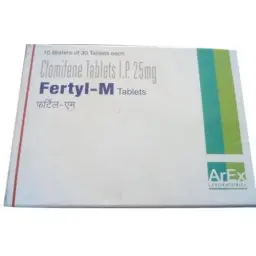


Selective Estrogen Receptor Modulator (SERM)

Selective Estrogen Receptor Modulator (SERM)

Selective Estrogen Receptor Modulator (SERM)
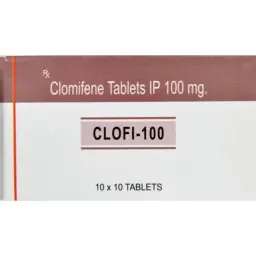
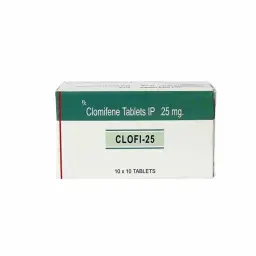
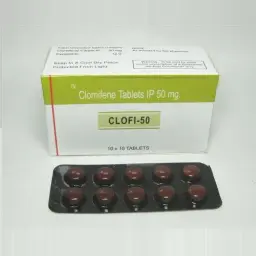



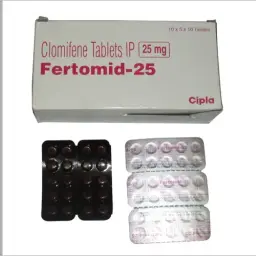
Trade Name: Fertomid
Compound: Clomiphene Citrate
Strength: 25 mg/tab
Container: 50 Pills in Sachet
Manufacturer: Cipla
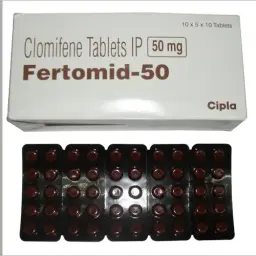

Trade Name: Clomid 50
Compound: Clomiphene Citrate
Strength: 50 mg/pill
Container: 100 Pills
Manufacturer: Stealth Labs USA
Lab Tested: View Result
Shipped Without Label!
Selective Estrogen Receptor Modulator (SERM)
The Clomiphene category brings together available products containing this selective estrogen receptor modulator (SERM), also commonly associated with the Clomid name. Clomiphene interacts with estrogen receptors and can influence hypothalamic-pituitary-gonadal signaling. Browse available products and compare labeled tablet strengths, package quantities, manufacturers, published laboratory testing, pricing and USA Domestic or International warehouse availability.
Clomiphene is commonly supplied as an oral tablet. Check the labeled amount per tablet and total package quantity on each individual product listing.
Products can differ in labeled tablet strength, package quantity and manufacturer even when they contain the same active pharmaceutical ingredient.
Where laboratory reports are available, individual product pages provide access to measured results, testing dates and reported batch information.
Clomiphene products may be stocked in the USA Domestic Warehouse, International Warehouse or both depending on current inventory.
Clomiphene is a prescription medicine belonging to the selective estrogen receptor modulator (SERM) class. Rather than reducing estrogen production itself, Clomiphene interacts with estrogen receptors and can modify estrogen-mediated feedback within the endocrine system.
Clomiphene is not an anabolic-androgenic steroid and does not directly replace Testosterone. Its effects on reproductive hormones arise from changes in endocrine signaling rather than from supplying an external androgen.
Clomiphene is commonly supplied pharmaceutically as clomiphene citrate. Clomid is a widely recognized brand name associated with the medicine, while other manufacturers market Clomiphene under different brand or generic names.
When comparing products, check the listed active substance, labeled tablet strength, package quantity and manufacturer rather than relying solely on the brand name or package design.
Clomiphene's pharmacology involves modulation of estrogen receptor signaling. Of particular importance is its effect on estrogen-mediated feedback within the hypothalamic-pituitary-gonadal axis.
Changes in this feedback can influence secretion of the gonadotropins luteinizing hormone (LH) and follicle-stimulating hormone (FSH). These hormones participate in normal reproductive function and gonadal hormone production.
This mechanism distinguishes Clomiphene from medicines that directly provide testosterone and from aromatase inhibitors that reduce estrogen synthesis.
Clomiphene should not be confused with aromatase inhibitors such as Anastrozole and Exemestane. Although all of these medicines involve estrogen-related pathways, their mechanisms are fundamentally different.
Clomiphene is a SERM and modifies estrogen receptor signaling. Aromatase inhibitors instead reduce estrogen synthesis by inhibiting the aromatase enzyme.
Blocking or modifying signaling at an estrogen receptor is therefore not equivalent to reducing the amount of estrogen being produced. The two drug classes should not be treated as interchangeable simply because they may appear together in an ancillary or PCT catalog.
Clomiphene and Tamoxifen are both selective estrogen receptor modulators, but they are separate medicines with different established clinical uses and pharmacological characteristics.
Both interact with estrogen receptors, yet a SERM can behave differently depending on the tissue involved. Sharing the same broad drug class therefore does not mean that Clomiphene and Tamoxifen produce identical effects or should be treated as interchangeable products.
When comparing them within the catalog, start with the actual active substance rather than treating "SERM" as a single ingredient or product type.
Toremifene is another selective estrogen receptor modulator, but it is pharmacologically distinct from Clomiphene and has different established medical applications.
The presence of several SERMs in the same catalog can make these products appear more similar than they actually are. Clomiphene, Tamoxifen and Toremifene should each be identified by their individual active ingredient and product specifications.
When browsing Clomiphene products, useful comparison points include the labeled amount per tablet, total tablet count, manufacturer, current price, warehouse location and published laboratory testing where available.
Products containing Clomiphene can use different manufacturer-specific branding and package configurations. Reviewing the complete product specification provides a clearer comparison than relying on price or packaging alone.
The labeled mg-per-tablet strength identifies the amount of active ingredient stated for each tablet. Package quantity separately identifies the total number of tablets supplied.
Two Clomiphene products can therefore contain the same active substance while differing in tablet strength or package quantity. Check both specifications when comparing available products.
Selected Clomiphene products may have published laboratory reports that provide an additional reference point when comparing the labeled specification with the measured result reported for a submitted sample.
Where testing is available, review the identified active substance, measured result, testing date and reported batch number. If multiple reports have been published, results from different batches or testing dates can be reviewed individually.
Each laboratory report applies to the submitted sample identified in that analysis. A result from one sample does not independently verify every tablet, package or future production batch.
Clomiphene has a long-established medical role in reproductive medicine. In the United States, its established approved use centers on inducing ovulation in appropriately selected women with ovulatory dysfunction.
Its ability to alter estrogen feedback and influence gonadotropin signaling has also made Clomiphene relevant to research and clinical discussion involving male reproductive endocrinology. However, the regulatory status and evidence for a particular use should be distinguished from its established approved indication.
Clinical suitability depends on the condition being treated, medical history and appropriate evaluation rather than on the hormone effects of Clomiphene alone.
Clomiphene is sometimes discussed in relation to testosterone because modifying estrogen feedback can influence LH and FSH secretion, which in turn can affect endogenous gonadal function.
This is fundamentally different from administering external Testosterone. Clomiphene does not contain testosterone and should not be described as a testosterone product.
Hormone responses also vary between individuals. A change in endocrine signaling does not guarantee a particular testosterone level, fertility outcome or symptom response.
Clomiphene is frequently discussed in bodybuilding communities in the context of post-cycle therapy (PCT). This relates to the fact that external anabolic-androgenic steroid exposure can suppress normal hypothalamic-pituitary-gonadal signaling.
The degree and duration of suppression can vary substantially according to the substances involved, duration of exposure and individual physiology. For example, different testosterone esters such as Testosterone Cypionate and Testosterone Enanthate have different pharmacokinetic characteristics, while non-testosterone anabolic steroids introduce additional variables.
Clomiphene's presence in PCT discussions does not establish that a standardized protocol is appropriate for every situation. Hormonal recovery is a medical and physiological issue that cannot be determined reliably from the name of a previous steroid cycle alone.
For that reason, this category explains why Clomiphene appears within a PCT and ancillary catalog without providing Clomiphene dosing schedules, cycle combinations or individualized post-cycle protocols.
Visual symptoms are an important safety consideration with Clomiphene. Reported effects can include blurred vision, flashes, spots and other visual disturbances.
New visual symptoms should not simply be ignored or assumed to be a routine part of treatment. Product prescribing information includes specific precautions concerning visual disturbances, particularly when symptoms are significant or persistent.
Activities requiring clear vision can also become unsafe when visual disturbances occur.
Clomiphene is a pharmacologically active prescription medicine and can cause clinically significant adverse effects. Potential effects include headache, flushing, abdominal or pelvic symptoms, nausea and visual disturbances, among others.
In its established fertility-treatment context, ovarian enlargement and multiple pregnancy are additional important considerations. Product-specific contraindications and warnings also apply, including circumstances involving pregnancy, liver disease and certain hormone-sensitive conditions.
Because Clomiphene affects endocrine signaling, symptoms alone are not sufficient to determine whether treatment is appropriate. Medical history, relevant laboratory information and the underlying reason for treatment all matter.
A published laboratory report can provide information about an analyzed product sample but does not establish that taking Clomiphene is medically appropriate or safe for an individual. This category is intended for product identification and comparison and does not provide individualized treatment, PCT or dosing guidance.
Clomiphene should not simply be described as an estrogen-lowering medicine. Its primary pharmacological action involves modulation of estrogen receptors rather than direct inhibition of estrogen synthesis.
This is an important distinction from aromatase inhibitors such as Anastrozole and Exemestane, which act on the aromatase enzyme and reduce estrogen production.
Understanding this difference helps separate SERMs from AIs when comparing products within the broader ancillary catalog.
Clomiphene products may be available from the USA Domestic Warehouse, the International Warehouse, or both. Available manufacturers, tablet strengths and stock levels can differ between warehouse locations.
For delivery within the United States, USA Domestic shipments typically take 4–5 business days after dispatch, while International Warehouse shipments typically take 15–20 business days after dispatch.
Delivery estimates begin after dispatch and do not include order processing time. Additional delivery, tracking and reship information is available on the Shipping Information page.
Bitcoin and other supported cryptocurrencies are available at checkout. When comparing Clomiphene products, review the manufacturer, labeled tablet strength, package quantity, current price, available laboratory reports and warehouse location.
Where the store's separate crypto discount applies, eligibility depends on the current pricing status of the product. Already discounted products should not automatically be assumed to qualify for an additional discount.

